
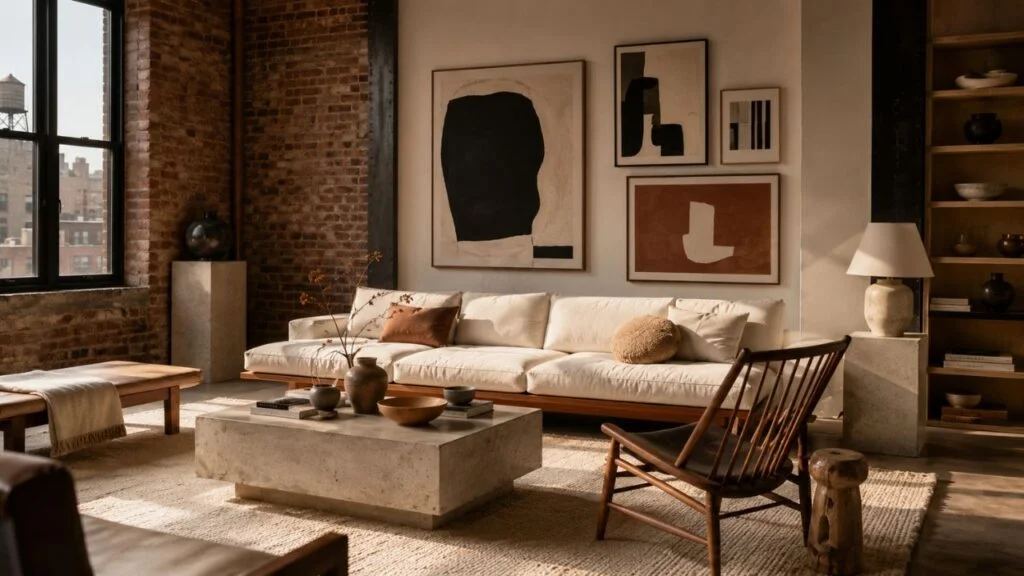
There is a reason the mid century modern house continues to inspire homeowners, architects, and interior designers decades after the movement first emerged.
Its clean lines, thoughtful proportions, and connection to nature have never truly gone out of style.
But today’s interpretation feels noticeably different.
Instead of recreating colorful interiors from the 1950s and 1960s, designers are blending mid century modern house design with the quiet elegance of natural materials, warm neutral palettes, and timeless craftsmanship.
The result is a home that feels sophisticated without being extravagant, modern without feeling cold, and luxurious without relying on excess.
This is where mid century modern meets quiet luxury.

Why the Mid Century Modern House Still Feels Timeless
The lasting appeal of a mid century modern house has very little to do with famous furniture.
Its true strength lies in its philosophy.
From the beginning, mid century modern design believed that beautiful homes should improve everyday life.
Rooms were open and filled with natural light.
Furniture was designed for comfort as much as beauty.
Materials were honest rather than decorative.
Architecture encouraged a seamless connection between indoor and outdoor living.
These ideas remain just as relevant today as they were more than half a century ago.
Rather than following trends, they focus on creating homes that simply feel good to live in.
That timeless foundation is one of the reasons the mid century modern house continues to evolve without ever losing its identity.
Quiet Luxury Gives Mid Century Modern a New Perspective
Quiet luxury has transformed the way many people approach interior design.
Instead of creating dramatic visual statements, it emphasizes thoughtful restraint.
Quality replaces quantity.
Craftsmanship replaces branding.
Natural materials become the focal point.
When these principles are combined with a mid century modern house, the result feels surprisingly effortless.
Warm walnut cabinetry replaces glossy finishes.
Travertine and limestone introduce natural texture.
Soft linen and wool create comfort.
Handmade ceramics add subtle character.
Every material contributes to a calm atmosphere without demanding attention.
Rather than decorating to impress, the goal becomes creating spaces that support everyday life.
Beyond the Iconic Furniture
For many people, mid century modern begins and ends with recognizable furniture.
Iconic lounge chairs.
Walnut sideboards.
Low-profile sofas.
Sculptural coffee tables.
While these pieces certainly define the visual language of the movement, they were never the entire story.
The original philosophy was about creating balance between beauty and function.
Today’s quiet luxury interiors return to that original intention.
Instead of filling a mid century modern house with famous furniture, they focus on thoughtful proportions, natural materials, and rooms that feel comfortable every day.
The emphasis shifts away from collecting design icons and toward creating harmonious living environments.
A beautifully crafted dining table becomes more important than owning a recognizable chair.
Comfort becomes just as valuable as appearance.
The home feels lived in rather than curated.

Natural Materials Create Quiet Luxury
One of the defining characteristics of today’s mid century modern house is its celebration of natural materials.
Wood remains central to the design.
Walnut continues to be one of the most popular choices because it introduces warmth while maintaining the clean lines that define the style.
Stone adds another layer of quiet sophistication.
Travertine.
Limestone.
Marble.
Textured concrete.
Rather than feeling cold, these materials create depth and permanence.
Natural textiles soften the architecture.
Linen curtains gently diffuse sunlight.
Bouclé upholstery adds warmth.
Leather develops character over time.
Wool rugs introduce subtle texture underfoot.
Instead of relying on decoration, the room gains personality through the materials themselves.
A Softer Color Palette

Traditional mid century modern interiors often embraced bold colors.
Mustard yellow.
Burnt orange.
Olive green.
Turquoise.
These colors reflected the optimism of their time.
Today’s mid century modern house has evolved toward a quieter palette.
Warm white.
Cream.
Sand.
Clay.
Soft olive.
Deep walnut.
Muted charcoal.
These colors work together rather than competing for attention.
The focus shifts away from contrast and toward atmosphere.
Instead of noticing individual colors, you notice how calm the room feels.
This restrained palette also allows natural materials to become the visual highlight of the home.
Simplicity Without Feeling Empty

One of the biggest misconceptions about quiet luxury is that it requires minimalism.
A mid century modern house proves otherwise.
These interiors remain warm, welcoming, and comfortable.
Books sit on open shelves.
Artwork adds personality.
Plants introduce life.
Textiles soften clean architectural lines.
The difference lies in intentional editing.
Every object has a purpose.
Nothing feels unnecessary.
The room breathes because it isn’t filled simply for the sake of decoration.
This balance between simplicity and warmth is what gives modern mid century modern interiors their enduring appeal.
Designing for Everyday Living
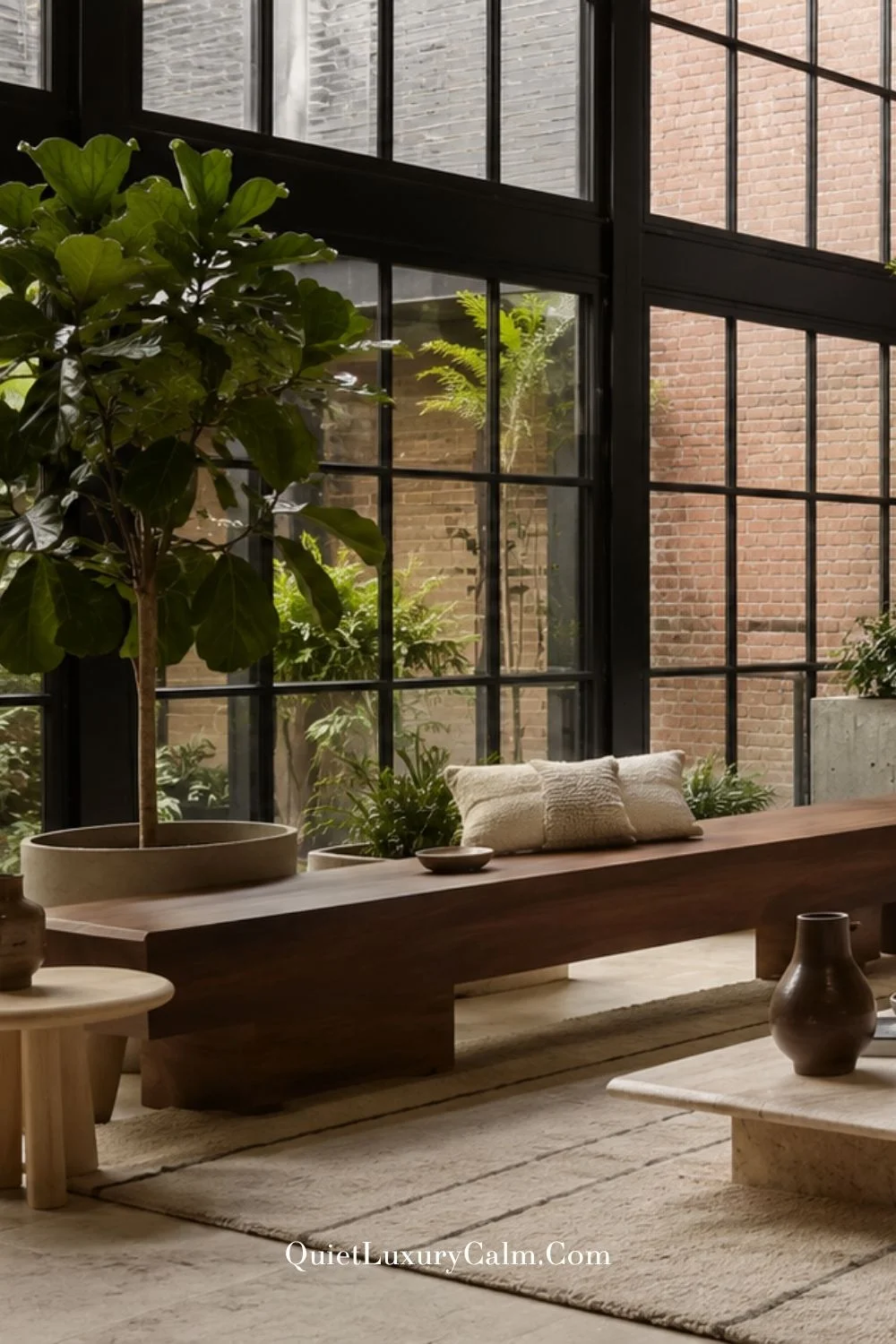
The original designers behind the mid century modern house believed that great design should improve daily life.
That philosophy feels especially relevant today.
Comfortable seating encourages conversation.
Large dining tables invite family gatherings.
Open layouts allow spaces to adapt naturally throughout the day.
Storage keeps daily routines simple.
Natural light changes the atmosphere from morning until evening.
These homes are designed to be lived in rather than admired from a distance.
Quiet luxury embraces this same mindset.
Instead of creating interiors primarily for photographs, it prioritizes spaces that feel calm, functional, and deeply comfortable.
Why the Mid Century Modern House Is Making a Comeback

Perhaps the renewed interest in the mid century modern house has less to do with nostalgia and more to do with the way people want to live today.
After years of fast-moving design trends, many homeowners are searching for something more lasting.
They want homes that won’t feel outdated after a single season.
They value craftsmanship over constant consumption.
They appreciate furniture that becomes more beautiful with age.
They prefer timeless materials instead of temporary finishes.
Mid century modern naturally supports those values.
When combined with quiet luxury, it creates interiors that feel refined without becoming formal and welcoming without becoming cluttered.
Final Thoughts
The beauty of the mid century modern house has never been about following a particular decade.
It has always been about thoughtful living.
Through the lens of quiet luxury, those original ideas become even more meaningful.
Natural materials replace unnecessary decoration.
Comfort becomes a form of elegance.
Craftsmanship becomes the true expression of luxury.
Rather than chasing trends, these homes celebrate timeless design that grows richer with every passing year.
Perhaps that is why the mid century modern house continues to inspire generation after generation.
Not because it belongs to the past.
But because its principles still offer a beautiful way to live today.


