
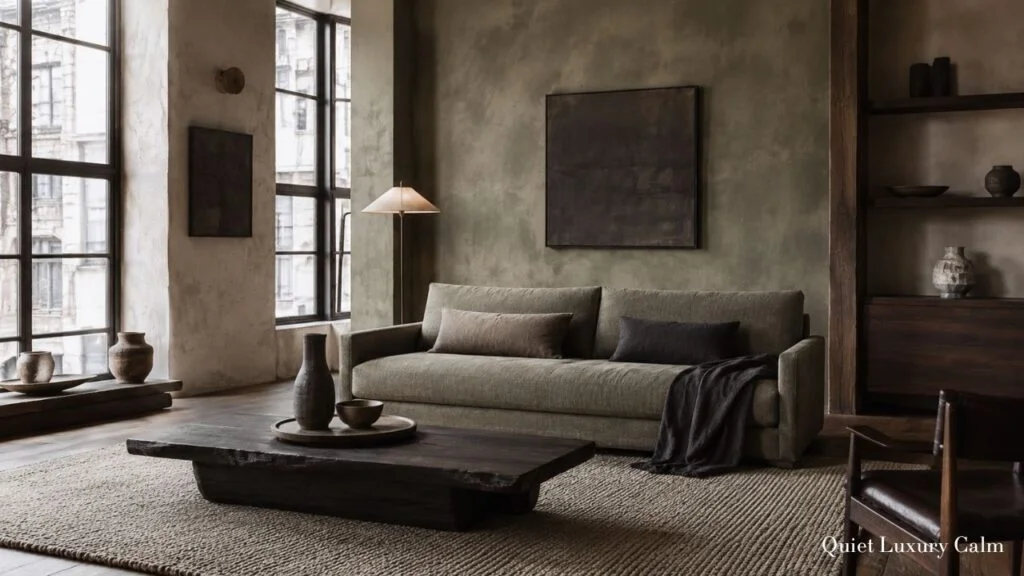
Wabi sabi interiors are often described through imperfection, simplicity, and age. But in a refined home, the idea should never feel rough, unfinished, or accidentally bare. At its best, wabi sabi creates a quieter kind of beauty: softened materials, natural variation, warm light, and a room that feels deeply considered rather than overly decorated.
Through the lens of quiet luxury, this philosophy becomes more polished. It is not about distressed furniture, raw surfaces, or rustic styling. It is about restraint, patina, tonal depth, and the confidence to let fewer elements carry more weight.
A calm room does not need to be empty. It needs to feel resolved.
Wabi Sabi Meaning
The meaning of wabi sabi comes from a Japanese way of seeing beauty in impermanence, imperfection, simplicity, and the natural passage of time. In interiors, this can appear through aged materials, matte finishes, quiet textures, and objects that feel softened rather than overly new.
But this does not mean a home should look neglected or unfinished.
A refined interpretation is more subtle. It might be seen in the soft grain of walnut, the cloudy surface of honed stone, the relaxed fall of linen curtains, or the warm patina of aged brass. These details do not shout for attention. They create depth slowly.
In a quiet luxury interior, wabi sabi is not imperfection used as decoration. It is imperfection handled with restraint.
Why This Style Feels Calm
This kind of interior feels calm because it reduces visual noise. The eye is not pulled toward glossy finishes, crowded surfaces, harsh contrast, or too many decorative objects.
Instead, the room relies on proportion, spacing, texture, and atmosphere.
A deep linen sofa, a wool rug, a stone coffee table, a warm lamp, and one piece of restrained artwork can create more presence than a room filled with accessories. The calm comes from editing, not emptiness.
The strongest spaces are layered, but controlled. They have softness, shadow, weight, and breathing room.
Calm is often the result of careful omission.
Where Wabi Sabi And Quiet Luxury Meet
Wabi sabi and quiet luxury meet through restraint. Both value subtlety over display. Both understand that materials can create more atmosphere than decoration. Both prefer depth, softness, and intention over obvious styling.
The difference is polish.
A traditional interpretation may lean rustic, raw, or heavily handmade. Quiet luxury asks for more refinement. It needs cleaner lines, stronger proportions, elevated materials, and a sense of architectural control.
A quiet luxury version might use a travertine table instead of a rough reclaimed wood bench. It might choose aged brass instead of shiny gold, plaster-like walls instead of heavily textured surfaces, and a soft wool rug instead of a coarse natural-fiber layer.
The result is natural, but not rustic. Minimal, but not empty. Calm, but not plain.
Patina, Not Distress
One of the most important distinctions is the difference between patina and distress.
Patina feels earned. It appears as bronze deepens, wood softens, stone develops gentle variation, and linen becomes more relaxed with use. It gives a room history without making it look worn down.
Distress often feels forced. Artificially weathered furniture, heavily rough wood, and exaggerated aged finishes can make a space feel decorative rather than refined.
For Quiet Luxury Calm, patina is the better language. Choose materials that age quietly: walnut, oak, honed marble, travertine, bronze, aged brass, wool, linen, and matte plaster-style walls.
The room should not look damaged. It should look settled.
Materials That Create Refined Depth
A calm interior depends on materials more than accessories. The surfaces themselves should carry the mood.
Honed stone works beautifully because it absorbs light rather than reflecting it sharply. Travertine, limestone, marble, and soft neutral stone bring weight without heaviness.
Wood adds warmth and structure. Walnut, oak, smoked oak, and dark stained wood feel especially strong when the finish is softened rather than glossy.
Textiles should feel natural but controlled. Linen curtains, wool rugs, refined boucle, matte upholstery, and soft cotton can add quiet texture without making the room feel casual.
Metal should be used sparingly. Aged brass, bronze, blackened steel, or brushed nickel can add contrast without becoming flashy.
The goal is not to use many materials. The goal is to repeat a few good ones with care.
Color Palettes That Feel Calm But Not Flat
A calm palette does not have to be beige-only. In fact, flat beige rooms often lack the depth needed for quiet luxury.
The better approach is tonal layering. Choose muted, grounded colors that feel softened rather than bright.
Strong palette directions include:
- Warm ivory, walnut, aged brass, and soft taupe
- Stone white, pale sage, natural oak, and linen
- Mushroom taupe, deep cocoa, bronze, and cream
- Soft greige, dusty olive, sandstone, and blackened steel
- Plaster white, slate blue, dark walnut, and oatmeal
- Charcoal, warm beige, smoked wood, and softened brass
These palettes work because they create quiet variation. They give the room shadow, warmth, and structure without becoming loud.
A refined room does not need strong color. It needs tonal discipline.
How To Keep The Room From Looking Empty
The biggest risk with this look is taking restraint too far. A room can have space and still lack depth. It can look calm in a photograph but feel unfinished in real life.
To avoid this, focus on scale.
Choose fewer pieces, but make them substantial. A generous sofa feels calmer than several small seats. A stone coffee table has more presence than a thin decorative table. A tall floor lamp can anchor a corner without adding clutter.
Negative space only works when the surrounding pieces have strength. Otherwise, it becomes vacancy.
Lighting is also essential. Use warm lamps, sconces, floor lights, and indirect glow. Avoid relying only on overhead lighting. Shadow gives the room depth and makes the materials feel softer.
Keep surfaces edited. A tray, a small stack of books, and one sculptural object may be enough. The point is not to remove life from the room. It is to let each detail breathe.
Luxury is not what you add, but what you allow to remain.
More on Wabi Sabi
7 Wabi Sabi Principles: The Japanese Philosophy Behind Timeless Interior Design
10 Common Mistakes To Avoid
1. Making the room look unfinished
This style is not about leaving a space unresolved. A refined room still needs balance, proportion, and intention.
2. Using too many rough textures
Too much roughness can make the room feel rustic. Use texture through linen, wool, honed stone, matte walls, and softened wood.
3. Confusing patina with distress
Patina feels natural and earned. Distress often looks forced. Choose aged finishes that feel subtle rather than decorative.
4. Making everything beige
Calm does not require a beige-only palette. Muted olive, slate blue, cocoa, taupe, charcoal, and warm ivory can all feel refined.
5. Leaving the room too bare
Negative space needs strong surrounding pieces. Without material weight, the room can feel empty instead of peaceful.
6. Adding too many small objects
Small accessories create visual noise quickly. Choose fewer objects with stronger form, material, and purpose.
7. Choosing shiny finishes
Glossy surfaces and polished metals can feel too sharp. Matte, honed, brushed, and aged finishes usually feel calmer.
8. Ignoring lighting
Harsh overhead light flattens the room. Use warm lamps, sconces, and soft shadow to create atmosphere.
9. Letting the room become too rustic
Avoid distressed wood, rough pottery overload, raw jute, and overly handmade styling if the goal is quiet luxury.
10. Treating the look as a trend
The strongest interiors come from philosophy, not formula. The goal is calm through restraint, depth, and thoughtful editing.
The Quiet Luxury Calm Approach
For Quiet Luxury Calm, this style is not copied literally. It is translated.
The refined version is warm, architectural, softly layered, and edited. It avoids rustic styling, excessive handmade texture, distressed finishes, glossy perfection, and overdecorated surfaces.
A room might include matte plaster walls, linen curtains, a deep sofa, a honed stone table, aged brass lighting, dark wood joinery, a wool rug, and one quiet artwork. Nothing feels loud. Nothing feels accidental.
This is where the philosophy becomes most powerful. It reminds us that calm is not plainness. Calm is composition. It is material intelligence. It is the quiet confidence of a room where every element has been chosen with care.
A refined home does not need to be perfect. It needs to feel resolved.
10 FAQs
1. What does wabi sabi mean in interior design?
It means finding beauty in simplicity, age, natural materials, imperfection, and the passage of time. In interiors, it appears through softened finishes, quiet textures, warm light, and restrained styling.
2. Is it the same as minimalism?
No. Minimalism often focuses on reduction. This approach focuses on natural depth, softness, age, and impermanence. A room can be simple without feeling empty.
3. Can this style feel luxurious?
Yes, when handled with refinement. Honed stone, linen, wool, walnut, aged brass, bronze, and warm lighting can make a space feel calm, expensive, and understated.
4. What is the difference between this and quiet luxury?
One values imperfection, age, and natural change. Quiet luxury values refinement, restraint, and quality. Together, they create interiors that feel calm, material-rich, and elegant without being showy.
5. What colors work best?
Muted, grounded colors work best. Warm ivory, taupe, mushroom, olive, charcoal, cocoa, slate blue, stone, and natural wood tones all support a calm palette.
6. How do I make it look modern?
Use clean-lined furniture, architectural lighting, refined materials, and edited styling. Avoid overly rustic finishes or too many handmade objects.
7. What materials work best?
Honed stone, travertine, marble, walnut, oak, linen, wool, plaster-style walls, aged brass, bronze, and brushed metal all work well.
8. How do I avoid making the room look bare?
Choose fewer pieces with more presence. Use generous textiles, strong furniture proportions, layered lighting, and natural materials with depth.
9. Does the palette have to be neutral?
No. Muted color can work beautifully. Soft olive, slate blue, dusty rose, cocoa, and muted terracotta can feel calm when used with restraint.
10. What is the easiest way to begin?
Start with lighting and materials. Replace harsh light with warm lamps, simplify surfaces, add linen or wool, choose one aged metal finish, and introduce natural stone or wood.


