
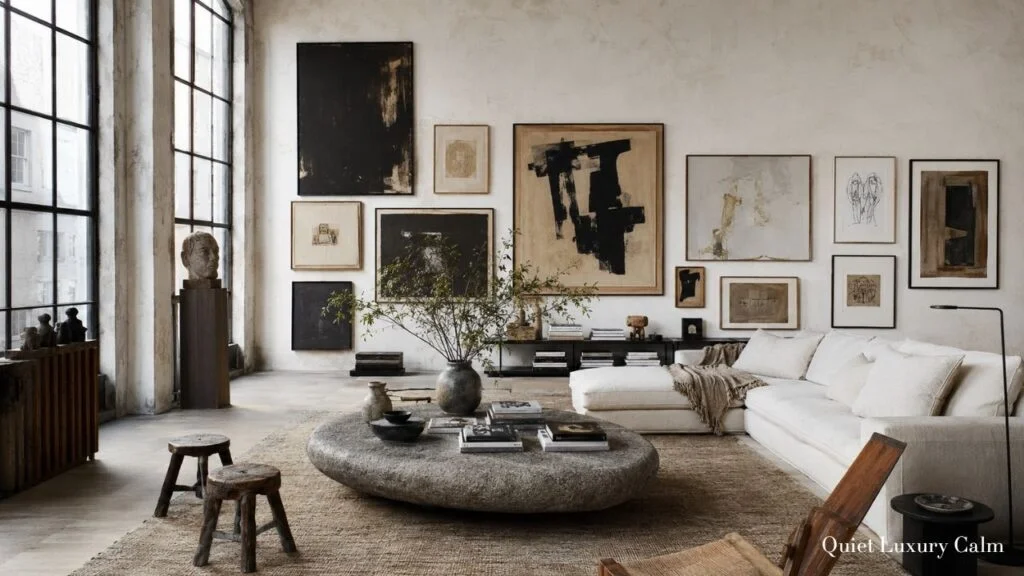
Introduction
Discover the timeless Japanese principles that celebrate simplicity, authenticity, imperfection, and tranquility—and learn how they continue to inspire architecture, interior design, art, craftsmanship, and everyday living.
What Are the 7 Principles of Wabi Sabi?
The seven principles of wabi sabi form the foundation of one of Japan’s most enduring aesthetic philosophies. While many people know wabi sabi through calming interiors or handcrafted ceramics, its influence extends far beyond design. It is a philosophy that encourages us to appreciate simplicity, authenticity, nature, and the quiet beauty that develops through time.
In a world that often celebrates perfection, speed, and constant consumption, the principles of wabi sabi offer a refreshing alternative. They remind us that beauty is not always flawless or polished. Sometimes it is found in weathered wood, handmade pottery, changing seasons, faded linen, or the peaceful silence of an uncluttered room.
Rooted in Zen Buddhism, these principles have shaped Japanese architecture, gardens, tea ceremonies, art, and craftsmanship for centuries. Today, they continue to inspire designers, artists, architects, and homeowners who seek spaces that feel calm, meaningful, and timeless.
In this guide, we’ll explore each of the seven principles of wabi sabi, what they mean, where they originated, and how they can be applied to modern life.
What Is Wabi Sabi?
Wabi sabi is a traditional Japanese philosophy that finds beauty in imperfection, impermanence, and simplicity.
Rather than celebrating flawless surfaces or excessive decoration, it encourages an appreciation for authenticity, natural materials, and the marks left by time. A weathered stone pathway, an antique wooden table with visible grain, or a handmade ceramic bowl with subtle irregularities all embody this philosophy.
Unlike many Western design movements that often pursue symmetry and perfection, wabi sabi embraces individuality. Every crack, variation, and sign of aging tells a story, adding character rather than diminishing value.
At its heart, wabi sabi is less about appearance and more about perspective. It teaches us to slow down, notice the ordinary, and appreciate life’s transient nature.
Today, the philosophy influences everything from architecture and interiors to fashion, photography, gardening, ceramics, and mindful living.
What Does Wabi Mean?
The word wabi originally described the quiet solitude of living in nature, away from material wealth and social status. Over time, its meaning evolved into something more positive, representing simplicity, humility, contentment, and understated elegance.
Today, wabi encourages us to find beauty in modest surroundings rather than extravagance. It values thoughtful craftsmanship over mass production and meaningful experiences over unnecessary possessions.
In design, wabi is reflected through uncluttered spaces, restrained palettes, honest materials, and an atmosphere that feels peaceful rather than impressive.
More importantly, wabi is a mindset. It reminds us that happiness often comes from appreciating what we already have instead of constantly seeking more.
What Does Sabi Mean?
While wabi focuses on simplicity, sabi celebrates the beauty that develops through age and time.
The gentle patina on bronze, weathered timber, faded textiles, worn leather, or stone softened by decades of use all reflect sabi. Rather than seeing these signs as flaws, the philosophy recognizes them as evidence of a meaningful life.
Sabi teaches that nothing remains unchanged. Everything grows older, evolves, and carries the marks of its journey.
This appreciation for aging creates a deeper emotional connection with objects, encouraging us to repair, preserve, and cherish them instead of replacing them.
In many ways, sabi transforms time itself into a form of beauty.
Wabi vs. Sabi: What’s the Difference?
Although the two words are often used together, they describe different aspects of the same philosophy.
| Wabi | Sabi |
|---|---|
| Simplicity | Beauty through age |
| Humility | Patina and weathering |
| Contentment | Passage of time |
| Understated elegance | Character developed over years |
| Appreciation of less | Appreciation of impermanence |
Together, these ideas form the philosophy of wabi sabi, where beauty is found not in perfection, but in authenticity, simplicity, and the natural cycle of growth and aging.
The 7 Principles of Wabi Sabi
These seven Japanese aesthetic principles work together rather than separately. Each one contributes to a deeper understanding of beauty, creating a philosophy that values balance, authenticity, and quiet appreciation.
Let’s explore each principle in detail.
1. Kanso (簡素) — Simplicity
Meaning: Eliminate the unnecessary and focus on what truly matters.
Kanso is perhaps the most recognizable of the seven principles. It encourages simplicity—not as an exercise in deprivation, but as a way of creating clarity.
In Japanese aesthetics, simplicity is never empty. Instead, it allows important details to breathe. By removing unnecessary decoration, distractions, and excess, the remaining elements become more meaningful.
This principle can be seen throughout traditional Japanese architecture, where open spaces, clean lines, and natural materials create an atmosphere of quiet balance. Every object has a purpose, and every detail contributes to the overall harmony.
Kanso also extends beyond physical spaces. It encourages us to simplify our routines, relationships, and possessions, making room for what genuinely adds value to our lives.
In modern homes, Kanso might be reflected through thoughtful furniture placement, restrained styling, and carefully chosen materials rather than an abundance of decorative objects. A room feels complete not because it contains everything, but because nothing unnecessary remains.
Perhaps the greatest lesson of Kanso is that simplicity is not about having less—it is about allowing what matters most to become more visible.
2. Fukinsei (不均整) — Asymmetry
Meaning: Beauty exists in irregularity rather than perfect balance.
Nature rarely creates perfect symmetry. Trees grow in unexpected directions, rivers carve uneven paths through landscapes, and mountains rise with distinctive silhouettes. Fukinsei embraces this natural irregularity.
Rather than arranging everything with mathematical precision, this principle encourages compositions that feel organic and alive. Small variations create movement, warmth, and authenticity.
Traditional Japanese gardens beautifully demonstrate Fukinsei. Stones are placed asymmetrically, pathways gently curve, and plants grow in ways that appear effortless despite careful planning. The result feels peaceful because it reflects nature rather than rigid order.
This principle also appears in handmade ceramics, where slight variations in shape or glaze make each piece unique.
Beyond design, Fukinsei reminds us to accept imperfection within ourselves. Life rarely unfolds according to perfect plans, and its unexpected moments often become the most meaningful.
Instead of striving for flawless balance, Fukinsei teaches us to appreciate harmony that feels natural rather than manufactured.
3. Shibumi (渋味) — Understated Beauty
Meaning: Elegant beauty that is subtle rather than obvious.
Shibumi is often described as quiet sophistication. It is the kind of beauty that doesn’t rely on extravagance or decoration to make an impression. Instead, it reveals itself gradually, rewarding those who take the time to observe.
Unlike trends that demand immediate attention, Shibumi values restraint. It celebrates timeless design over fashion, craftsmanship over ornament, and quality over quantity.
In traditional Japanese culture, Shibumi can be seen in handcrafted ceramics, ink paintings, architecture, and textiles that appear simple at first glance but reveal remarkable depth through texture, proportion, and craftsmanship.
In modern life, Shibumi reminds us that true elegance rarely needs to announce itself. Whether it’s a beautifully written book, a thoughtfully prepared meal, or a carefully designed room, understated beauty often leaves the strongest and longest-lasting impression.
The principle encourages us to look beyond surface appearances and appreciate refinement that feels effortless rather than extravagant.
4. Shizen (自然) — Naturalness
Meaning: Being natural without pretense or artificiality.
Shizen celebrates authenticity. It encourages us to work with nature rather than attempting to control or imitate it.
This principle doesn’t simply refer to using natural materials. It also reflects honesty in craftsmanship, design, and daily life. A piece of timber should look like wood rather than being disguised beneath heavy finishes. Stone should retain its unique texture and variation instead of appearing artificially perfect.
Traditional Japanese architecture embraces Shizen through timber construction, paper screens, gardens, and an open relationship between indoor and outdoor spaces.
Beyond design, Shizen teaches us to live more authentically. It encourages genuine expression rather than trying to impress others or meet unrealistic expectations.
In many ways, Shizen reminds us that perfection often feels artificial, while authenticity creates lasting beauty.
5. Yugen (幽玄) — Subtle Depth
Meaning: Beauty that is felt rather than fully explained.
Yugen is perhaps the most poetic of the seven principles.
It describes the profound beauty found in mystery, suggestion, and the unseen. Rather than revealing everything immediately, Yugen allows space for imagination.
Think of mist drifting through mountains at sunrise, moonlight reflecting on still water, distant birdsong, or the quiet shadow beneath an ancient tree. These moments create emotion without needing explanation.
Japanese poetry, painting, theatre, and gardens often embody Yugen by leaving certain elements incomplete or understated, inviting the viewer to participate through imagination.
In today’s fast-paced world, where everything is designed to capture attention instantly, Yugen reminds us that not everything needs to be obvious.
Sometimes the most memorable experiences are the ones that leave something unsaid.
6. Datsuzoku (脱俗) — Freedom from Convention
Meaning: Breaking free from routine, expectation, and conventional thinking.
Datsuzoku encourages fresh perspectives.
It asks us to move beyond habits, predictable solutions, and established patterns in order to discover something more authentic.
Historically, Japanese tea masters often challenged expectations by introducing unexpected combinations of objects, spaces, and ceremonies. These subtle departures from convention encouraged participants to see familiar things with new appreciation.
In creative work, Datsuzoku inspires originality rather than imitation.
In everyday life, it may mean changing routines, approaching problems differently, exploring unfamiliar places, or allowing ourselves to think independently instead of following trends.
The principle reminds us that creativity often begins where convention ends.
7. Seijaku (静寂) — Tranquility
Meaning: Stillness, serenity, and inner peace.
Seijaku is often considered the culmination of the previous six principles.
When simplicity, authenticity, naturalness, subtle beauty, and freedom from convention come together, they create an atmosphere of tranquility.
This tranquility is not simply the absence of noise. It is an inner sense of calm that allows us to appreciate the present moment.
Traditional Japanese gardens, temples, and tea houses were designed to encourage this quiet awareness. Every path, stone, tree, and building worked together to create an environment where the mind could become still.
Today, Seijaku remains just as relevant. In a world filled with constant notifications, distractions, and endless information, creating moments of silence has become more valuable than ever.
Whether experienced in nature, through meditation, or simply in a thoughtfully designed home, tranquility allows us to reconnect with ourselves.
More on Wabi Sabi
Wabi Sabi Interiors: The Quiet Luxury Way To Create Calm, Depth, And Restraint
Why the Seven Principles Still Matter Today
Although these principles were developed centuries ago, their relevance has only grown stronger.
Modern life often rewards speed, consumption, perfection, and constant productivity. The seven principles offer a different perspective—one that values patience, craftsmanship, authenticity, and thoughtful living.
Today they influence countless creative disciplines, including:
- Architecture
- Interior design
- Furniture design
- Ceramics and pottery
- Landscape and garden design
- Fashion
- Photography
- Fine art
- Slow living
- Mindfulness
- Sustainable design
Many contemporary movements, including Japandi, quiet luxury, organic modern, and slow interiors, draw inspiration from these timeless ideas, even if they don’t always reference them directly.
Their lasting appeal comes from a simple truth: people naturally seek spaces and experiences that feel peaceful, genuine, and deeply human.
These principles remind us that beauty isn’t something we manufacture—it is often something we learn to notice.


