
Introduction
Scandinavian interiors have long been admired for their calm simplicity and connection to nature. Rooted in Nordic design traditions, these spaces focus on light, natural materials, and thoughtful restraint rather than excess decoration.
In recent years, sage green has become one of the most beautiful colors to complement Scandinavian design. Its muted, earthy tone reflects the natural landscapes of the Nordic region — moss-covered forests, weathered stone, and soft foliage.
When combined with the minimal principles of Scandinavian interiors, sage green introduces warmth and subtle depth while preserving the calm atmosphere these spaces are known for.
The result is an interior style that feels minimal, natural, and timeless.

The Scandinavian Design Philosophy
At the heart of Scandinavian interiors is a simple idea: beauty should be functional, calming, and connected to everyday life.
Nordic homes prioritize clean lines, uncluttered spaces, and natural materials. Instead of filling rooms with decorative objects, the focus is on carefully chosen pieces that bring both purpose and quiet beauty.
Furniture often features simple silhouettes with soft curves and light wood finishes. Walls are usually neutral, allowing natural light to fill the room and create a sense of openness even during long Nordic winters.
This philosophy pairs beautifully with sage green because the color carries the same qualities — soft, natural, and understated.
Rather than dominating a room, sage green gently enhances it.
Why Sage Green Works So Well in Scandinavian Interiors
Sage green has a quiet versatility that makes it ideal for Nordic spaces.
Unlike stronger greens, sage contains soft grey undertones that keep the color subtle and sophisticated. It feels organic and calming rather than bold or decorative.
This muted tone allows sage green to function almost like a neutral. It blends easily with the materials commonly used in Scandinavian interiors, such as light oak, birch wood, linen textiles, and stone surfaces.
The color also echoes the Nordic landscape, bringing a subtle connection to nature indoors.
In Scandinavian homes where minimalism is key, sage green adds just enough depth to keep the interior from feeling stark while maintaining the serene simplicity of the design.
Soft Architectural Backdrops
In Scandinavian interiors, walls often act as a quiet canvas.
Traditional Nordic homes favor shades like warm white, soft grey, and pale beige because they reflect natural light and help spaces feel open and airy. Sage green can be introduced in similar ways — either as a subtle wall color or through layered accents.
A pale sage wall can create a soothing atmosphere in living rooms and bedrooms without darkening the space. When paired with natural daylight, the color appears soft and slightly luminous.
In other homes, sage appears more subtly through cabinetry, built-in shelving, or painted furniture.
These architectural touches allow the color to integrate naturally into the structure of the room rather than feeling like decoration.
Natural Woods: The Nordic Foundation
Wood is one of the defining elements of Scandinavian interiors.
Nordic homes often feature light wood species such as oak, ash, or birch. These woods bring warmth and natural texture to minimalist spaces while keeping the palette bright.
When paired with sage green, light woods create a particularly harmonious effect.
The warm undertones of wood soften the cool grey notes in sage green, producing a palette that feels balanced and organic.
You might see this combination through oak dining tables, ash wood chairs, birch cabinetry, or floating shelves that display simple ceramics and books.
These natural materials reinforce the calm, grounded atmosphere that Scandinavian design celebrates.
Layering Textures Instead of Colors
Scandinavian interiors rarely rely on bold color contrast. Instead, they build depth through layered textures.
Materials like linen, wool, cotton, and boucle are used to create softness and warmth throughout the home. Rugs, throws, and cushions introduce comfort while maintaining a restrained color palette.
In a sage green Scandinavian interior, textiles might appear in shades of cream, oatmeal, soft grey, and pale green.
A wool rug beneath a light wood coffee table, linen curtains filtering natural light, or a boucle armchair beside a sage-painted wall all contribute to a calm and tactile environment.
These subtle layers create richness without disrupting the minimal aesthetic.
Scandinavian Living Rooms in Sage Green
The living room is often where the Scandinavian sage green palette feels most welcoming.
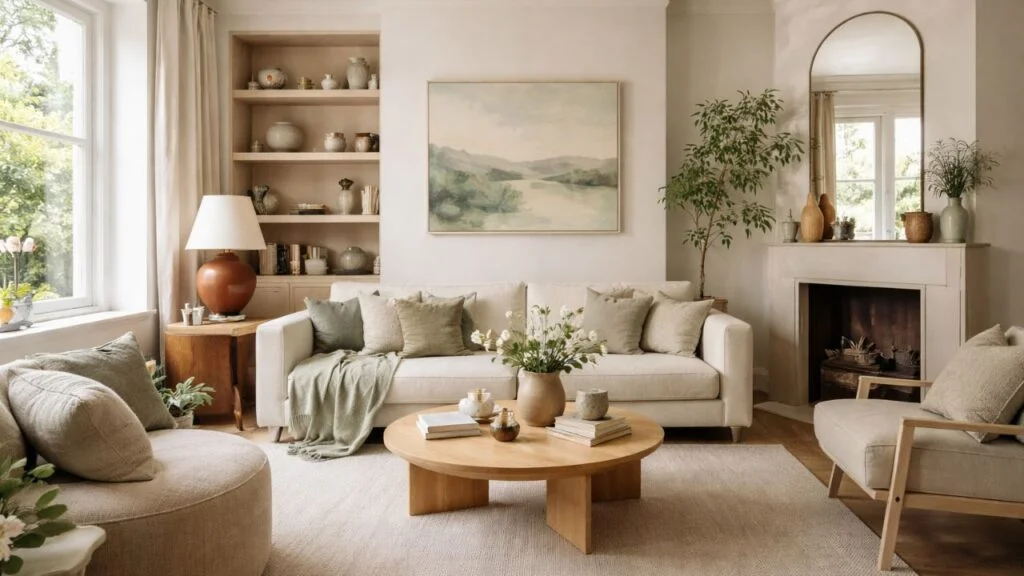
A typical space may feature a light neutral sofa paired with sage green cushions, natural wood furniture, and simple ceramics displayed on open shelving.
Plants are often included as well, reinforcing the connection to nature that Nordic design embraces.
Large windows allow daylight to fill the room, enhancing the soft tones of the palette.
The overall effect is a space that feels comfortable, uncluttered, and quietly elegant.
Kitchens with Soft Sage Accents
Scandinavian kitchens often lean toward simplicity, featuring clean cabinetry and minimal hardware.
Introducing sage green cabinetry or a sage-painted island can add warmth without disrupting the minimalist feel.
When combined with light wood counters, stone backsplashes, and matte metal fixtures, the color creates a fresh yet timeless kitchen environment.
Even smaller touches — like sage ceramics, linens, or bar stools — can subtly integrate the color into the space.
Bedrooms Designed for Calm
Bedrooms in Scandinavian homes are designed to encourage rest and quiet.
Soft sage green walls or bedding can enhance this peaceful atmosphere. Paired with linen sheets, wool throws, and light wood furniture, the palette feels calm and restorative.
Minimal décor, soft lighting, and natural textures ensure the space remains uncluttered and soothing.
This simplicity reflects the Nordic belief that home should be a place of comfort and well-being.
Lighting the Scandinavian Way
Lighting plays a crucial role in Scandinavian interiors.
Because Nordic winters bring limited daylight, homes rely heavily on warm and layered lighting to maintain a cozy atmosphere.
Pendant lights with soft diffusers, simple table lamps, and sculptural floor lamps create a warm glow that complements sage green tones beautifully.
The light highlights textures, wood grain, and textiles while preserving the calm mood of the room.
Materials That Define Scandinavian Sage Green Interiors
Scandinavian interiors are deeply rooted in the beauty of natural materials. Rather than relying on bold colors or heavy decoration, Nordic spaces achieve warmth and depth through carefully chosen textures and organic finishes. In Scandinavian sage green interiors, materials play a particularly important role in maintaining the balance between minimalism and comfort.
One of the most common materials in Nordic homes is light wood, especially oak and birch. These woods are celebrated for their soft grain, pale tones, and natural warmth. Light wood furniture—such as dining tables, shelving, and chairs—creates a gentle contrast against sage green walls or accents. The result is a palette that feels fresh, natural, and grounded.
Textiles are another essential layer in Scandinavian interiors. Materials like linen and cotton appear frequently in curtains, upholstery, bedding, and cushions. These fabrics introduce softness without overwhelming the minimalist aesthetic. Their relaxed, slightly textured surfaces complement sage green beautifully while allowing natural light to filter gently through the room.
To add warmth underfoot, many Nordic homes incorporate wool rugs. These rugs often feature subtle patterns or simple neutral tones that enhance the calm atmosphere of the space. Wool’s natural texture adds depth while keeping the palette soft and understated.
Decorative elements also follow the same philosophy of simplicity and craftsmanship. Ceramic pottery is commonly used in Scandinavian interiors, often displayed on open shelves or coffee tables. Handmade vases, bowls, and vessels introduce an artisanal touch that feels organic and timeless.
Another defining material is stone, which appears in tabletops, fireplaces, kitchen counters, and decorative objects. Stone surfaces bring quiet strength to the palette, balancing the softness of textiles and wood with their natural weight and texture.
Finally, lighting fixtures and hardware often feature matte metal finishes. Soft black, brushed brass, or aged metal tones appear in pendant lights, floor lamps, and cabinet hardware. These subtle metallic accents add structure and contrast while preserving the calm, natural mood of the space.
Together, these materials create interiors that feel warm, tactile, and inviting. In Scandinavian sage green homes, the beauty of the design lies not in excess decoration but in the quiet richness of natural textures layered thoughtfully throughout the room.
MORE ON SAGE GREEN INTERIORS:
Sage Green Interiors with Charcoal & Walnut Elegance
Color Trends for Interior Design 2026: The Quiet Luxury Shift

10 Common Mistakes to Avoid with Scandinavian Sage Green Interiors
Although Scandinavian sage green interiors appear effortlessly calm and simple, achieving this look requires thoughtful balance. Because the design relies on minimalism and natural materials, small mistakes can quickly disrupt the harmony of the space.
Avoiding these common pitfalls will help maintain the timeless, serene atmosphere that defines Nordic interiors.
1. Choosing Sage Green That Is Too Dark
Sage green in Scandinavian design should feel soft and natural. Very dark or overly saturated greens can make a space feel heavy and remove the airy quality that Nordic interiors are known for.
2. Adding Too Many Colors
Scandinavian design works best with a restrained palette. Introducing too many colors can break the calm visual flow of the room. Sage green should be balanced with neutrals like cream, soft grey, and warm wood tones.
3. Ignoring Natural Light
Natural light is essential in Nordic interiors. Rooms that block or minimize daylight can feel darker and less inviting. Keeping window treatments light and airy helps maintain the open, luminous atmosphere.
4. Choosing Glossy Finishes
Highly polished or glossy surfaces often clash with the organic feel of Scandinavian interiors. Matte paints, natural woods, and textured materials create a softer and more authentic aesthetic.
5. Overdecorating Minimal Spaces
One of the most common mistakes is filling the room with too many decorative objects. Scandinavian interiors rely on intentional simplicity, where each piece has purpose and meaning.
6. Using Furniture That Feels Too Heavy
Bulky or oversized furniture can disrupt the light and airy quality of Nordic spaces. Scandinavian furniture typically features clean lines, simple forms, and balanced proportions.
7. Mixing Too Many Wood Tones
While wood is central to Scandinavian interiors, using too many different wood colors can create visual clutter. Keeping wood tones consistent—such as light oak or birch—helps maintain harmony.
8. Forgetting Texture Layers
Minimal design does not mean empty design. Without layered textures such as wool rugs, linen fabrics, and woven textiles, a Scandinavian space can feel flat and unfinished.
9. Using Harsh Lighting
Bright, cold lighting can undermine the cozy atmosphere that Nordic homes aim to create. Soft, warm lighting through pendant lamps and table lamps produces a much more inviting environment.
10. Ignoring Negative Space
Scandinavian interiors embrace open space as part of the design. Leaving areas uncluttered allows materials, furniture, and colors like sage green to stand out naturally.
When these common mistakes are avoided, Scandinavian sage green interiors maintain their defining qualities—simplicity, warmth, and timeless beauty.
Closing Thought
Scandinavian sage green interiors show how minimal design can still feel warm, inviting, and deeply connected to nature.
Through soft colors, natural materials, and thoughtful restraint, these spaces create a quiet elegance that never feels forced or overly styled.
Sage green brings a gentle organic quality to Nordic interiors, balancing minimalism with warmth and depth.
The result is a home that feels calm, natural, and timeless — a place where simplicity becomes its own form of luxury.
10 FAQs About Scandinavian Sage Green Interiors
1. What are Scandinavian sage green interiors?
Scandinavian sage green interiors combine the calm minimalism of Nordic design with the soft, natural tone of sage green. This style focuses on light-filled spaces, simple furniture, natural materials, and a muted color palette that creates a peaceful and timeless atmosphere.
2. Why is sage green popular in Scandinavian interiors?
Sage green reflects the natural landscapes of Nordic countries, such as forests, moss, and foliage. Its muted tone adds warmth and depth to minimalist spaces while maintaining the calm and understated aesthetic that Scandinavian design is known for.
3. What colors pair best with sage green in Scandinavian design?
Sage green pairs beautifully with soft neutrals like warm white, cream, beige, and light grey. Natural wood tones such as oak and birch also complement sage green, creating a balanced palette that feels organic and harmonious.
4. Can sage green be used on walls in Scandinavian homes?
Yes, sage green can work beautifully on walls in Scandinavian interiors. A soft sage wall adds subtle color while still maintaining the light, airy feeling that Nordic design values.
5. What materials work best with Scandinavian sage green interiors?
Natural materials are essential in this style. Light oak or birch wood, linen textiles, wool rugs, ceramic pottery, stone surfaces, and matte metal lighting all complement sage green and help create a warm yet minimalist space.
6. Is Scandinavian design always minimal?
Scandinavian interiors emphasize simplicity, but they are not empty or cold. Instead, they focus on functional furniture, natural materials, and thoughtful details that create warmth and comfort within a minimalist framework.
7. How can you add sage green without repainting a room?
Sage green can be introduced through accents such as cushions, throws, ceramic vases, artwork, or upholstered furniture. These smaller elements allow you to experiment with the color while maintaining flexibility in your design.
8. Does sage green work well in small Scandinavian spaces?
Yes, sage green works well in smaller spaces because it is soft and muted rather than overpowering. When paired with light wood and neutral tones, it can make a room feel calm and inviting without feeling crowded.
9. What lighting works best for Scandinavian sage green interiors?
Warm, layered lighting works best. Simple pendant lights, table lamps with fabric shades, and soft ambient lighting help create the cozy atmosphere that Scandinavian interiors are known for.
10. Is sage green a timeless color choice for interiors?
Yes, sage green is considered timeless because it is inspired by nature and has a subtle, neutral quality. Its versatility allows it to blend easily with natural materials and minimalist interiors, making it a long-lasting design choice.


